Disclaimer
The information provided on or accessed through TrueToCrypto.com (the “Website”) is for general informational purposes only and is obtained from independent sources that are believed to be reliable. However, TrueToCrypto.com, its owners, affiliates, officers, employees, and agents (collectively, “We,” “Us,” or “Our”) make no representations or warranties, express or implied, as to the accuracy, completeness, timeliness, reliability, or suitability of the information contained on or accessed through this Website. Further read Disclaimer.
Introduction
Cryptocurrency has become a mainstream investment option, with millions of users worldwide participating in the digital asset market. Whether you’re a beginner or an experienced investor, buying cryptocurrency in 2026 is easier than ever, thanks to advancements in technology and user-friendly platforms.
This guide will walk you through the entire process of buying cryptocurrency, from selecting a platform to securing your assets. By the end, you’ll have the knowledge and confidence to start your crypto journey.
Why This Guide Is Different
Most “how to buy crypto” guides tell you which button to click. This one assumes something more useful: that the hardest part isn’t buying — it’s buying somewhere that will still legally exist next year, and holding it somewhere that can’t be drained.
If you’re in the European Union, the ground shifted permanently on July 1, 2026. That was the final enforcement date for the EU’s Markets in Crypto-Assets regulation (MiCA). From that day, any crypto-asset service provider serving EU clients without full MiCA authorisation is operating illegally and must cease services. Before MiCA, more than 3,000 crypto service providers operated across Europe; by the deadline, only around 244 firms had entered the ESMA register — under 8% of the market.
That’s not a technicality. It means most platforms a 2024-era guide would have recommended to you are now either gone from Europe, operating illegally, or restricted. This guide teaches you how to verify for yourself, so it stays useful after any specific list — including this one — goes stale.
Step 1: Decide What You Actually Want Crypto For
Before choosing anything, answer one question honestly: are you buying to hold for years, to trade actively, or to use for payments and applications?
This determines everything downstream. Long-term holders need a licensed on-ramp and a hardware wallet, and can ignore trading features entirely. Active traders need liquidity and a platform with a full trading-venue authorisation. Payment users need low fees and fast settlement.
Most people buying their first crypto are long-term holders who mistakenly optimise for trading features they’ll never use. If that’s you, your priorities are simple: a properly licensed platform, and a secure place to store what you buy. Everything else is noise.
Step 2: Understand What You’re Buying (Briefly)
Cryptocurrency is a digital asset secured by cryptography and recorded on a blockchain — a distributed ledger maintained by a network rather than a single company or government.
The practical implications that matter:
- Transactions are irreversible. There is no chargeback, no fraud department, no “I didn’t authorise that.” If you send funds to the wrong address, or approve a malicious transaction, the money is gone.
- Self-custody means full responsibility. If you hold your own keys, no one can freeze your assets — and no one can recover them for you.
- Volatility is structural, not a bug. Prices can move 20%+ in a day. Only commit money you can afford to see halve.
Bitcoin (BTC) and Ethereum (ETH) are the two largest and most established assets. Everything beyond them carries meaningfully higher risk, and the further down the market cap you go, the more the “investment” resembles a bet on someone else buying after you.
Step 3: Verify Your Platform Is Actually Licensed (The Step Everyone Skips)
This is the most important step in this guide, and almost no other guide includes it.
Under MiCA, a CASP authorisation is not a simple registration. It follows a full regulatory review covering governance, capital adequacy, management suitability, IT security, and AML infrastructure. The distinction matters: an old-style VASP registration just confirmed a business existed and said it would follow AML rules. A CASP licence means a financial regulator actually examined the business and approved it to handle your money. CASP Tracker
How to verify a platform yourself
Don’t trust any list — including mine. Lists rot. Registers don’t.
- Go to ESMA’s official CASP register (the European Securities and Markets Authority maintains it publicly).
- Search for the exact legal entity name, not the brand name. Many global exchanges serve the EU through a separate local entity — the brand you know may not be the entity that’s licensed.
- Check the services the licence covers. Around 200 firms hold full CASP authorisation, yet only about 14 can operate a live trading venue, which carries higher capital and technical bars than custody or brokerage. A firm licensed for custody isn’t necessarily licensed to run an exchange. BingX
- Cross-check against ESMA’s crypto warning list, which flags platforms regulators have identified as operating without authorisation.
What the landscape looks like in 2026
The ESMA register listed 325 authorised crypto-asset service providers as of mid-August 2026. Licensing has clustered by jurisdiction: Malta became the hub for large exchanges, with OKX, Crypto.com, Gemini, and Bitpanda all authorised through the MFSA. Luxembourg attracted global brands seeking rapid EU-wide passporting, including Coinbase and Bitstamp. The Netherlands holds a mix of crypto-native and payments-focused businesses, including Bitvavo, MoonPay, and Amdax. Bybit serves EEA users through Bybit EU GmbH, authorised by Austria’s FMA, and Revolut secured a MiCA licence via Cyprus’s CySEC. Kraken is authorised through Luxembourg’s CSSF. CASP Tracker + 3
Notable absences and casualties tell you more than the winners do. Binance, the largest exchange in the world by volume, does not appear in the ESMA register as a MiCA-licensed CASP. KuCoin was formally banned by Austria’s FMA in February 2026 for operating without MiCA authorisation. Estonia — once home to thousands of VASP-registered businesses under the old light-touch framework — now holds a tiny fraction of that number under MiCA’s stricter standards.
Why this matters to you directly: a platform without CASP authorisation is outside EU law, facing penalties up to €15 million or 12.5% of annual revenue. If your platform gets shut down or exits the EU, recovering your funds becomes a queue, not a transaction. BingX
If you’re outside the EU: the same principle applies with different registers. Check your national regulator — the FCA in the UK, FINMA in Switzerland, and equivalent authorities elsewhere. The specific body changes; the habit of verifying before depositing shouldn’t.
Step 4: Choose a Platform Type That Fits You
Once you’ve narrowed to licensed options, the choice is about model, not brand:
Full exchanges offer the widest asset selection and real order books. Best if you want choice and reasonable fees, and are comfortable with a slightly steeper interface.
Broker/neobank apps (including banks and investment platforms that have added crypto) are simpler, often let you hold crypto next to stocks, and typically charge more in spread. Best for first-time buyers who value simplicity over cost.
Peer-to-peer platforms connect buyers and sellers directly. Be aware that the P2P sector was hit hardest by regulatory tightening — several major names no longer exist. Treat any P2P platform with extra scrutiny; this is the segment where scams concentrate.
What to compare, in order of importance: licence status → fee structure (including the spread, not just the headline fee) → withdrawal policy (can you actually move crypto off-platform?) → security track record.
That third one catches people out. Some platforms make it awkward or expensive to withdraw to your own wallet. If you can’t take custody, you don’t really own it.
Step 5: Create and Secure Your Account
Sign up and complete KYC. Every licensed platform requires identity verification — passport or ID, sometimes proof of address. This isn’t optional under MiCA, and a platform that doesn’t ask is a red flag, not a convenience.
Enable two-factor authentication immediately — using an authenticator app, not SMS. SMS-based 2FA is vulnerable to SIM-swap attacks, which remain one of the most common ways crypto accounts get compromised. Use Google Authenticator, Authy, or a hardware security key.
Use a unique email address and a unique password. If your exchange login credentials appear in an unrelated data breach, credential-stuffing bots will find your account within hours.
Turn on withdrawal address whitelisting if the platform offers it. This means funds can only be sent to addresses you’ve pre-approved, with a delay on adding new ones — which defeats most account-takeover attacks.
Step 6: Fund Your Account
Bank transfer (SEPA in the EU) is usually cheapest and settles in one to two business days. Best default for most people.
Card payment is instant but carries meaningfully higher fees, often 2–4%. Fine for a small first purchase, expensive as a habit.
Transferring existing crypto works if you already hold assets elsewhere — always send a small test amount first.
One EU-specific note: if you’re moving stablecoins, check what’s actually supported before you send. USDT, DAI, USDe, FDUSD, PYUSD, and TUSD all lack MiCA authorisation, and Tether has stated no intention to pursue it. Sending an unsupported stablecoin to a licensed EU platform can leave you with a balance you can’t trade.
Step 7: Make Your Purchase
Select your asset, enter the amount, and — before confirming — read the total cost, not the headline price. The spread (the gap between what the platform pays and what it charges) is where most of the real cost hides, and it’s frequently larger than the stated fee.
Consider a limit order rather than a market order. A market order fills at whatever price is available right now; a limit order fills only at the price you set. On thin markets or during volatility, the difference can be significant.
Start smaller than you plan to invest. Make a small first purchase, then complete Step 8 (moving it to your own custody), then scale up once you’ve proven the whole chain works end to end. This costs you a few euros in extra fees and saves you from discovering a problem at full size.
Step 8: Move It Off the Exchange (Non-Negotiable Above a Threshold)
An exchange balance is a promise. Self-custody is possession.
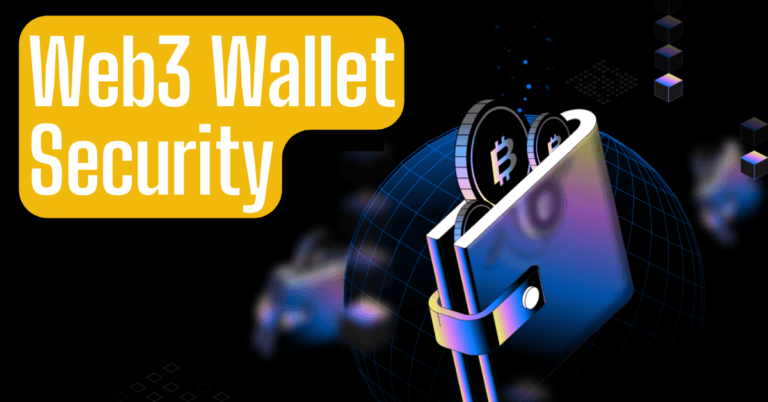
Hot wallets (software wallets on your phone or browser) are convenient for small amounts and active use, but they’re connected to the internet, which means they’re exposed to phishing, malware, and malicious dApp approvals.
Hardware wallets keep your private keys on a dedicated offline device. Every transaction requires physical confirmation on the device screen — which is exactly what defeats wallet drainers, clipboard-hijacking malware, and remote compromise.
Our rule of thumb: if you hold more than roughly €1,000 in crypto, or you intend to hold for more than a few months, a hardware wallet is worth the €60–€250. Below that, a reputable software wallet with strong 2FA is defensible.
When you set up any wallet, the seed phrase is everything. Write it down by hand, on the device’s own screen, and store it physically — never digitally, never photographed, never in a password manager or cloud note.
After You Buy: What Actually Matters
The original version of this guide had twelve more “steps” here. Most of them weren’t steps — they were topics. Here’s what genuinely deserves your attention after the purchase, honestly weighted.
Track your holdings (and your tax position)
Portfolio trackers sync with your exchanges and wallets to show real-time value and, critically, generate the transaction history you’ll need at tax time. Current options worth looking at include CoinStats, CoinTracker, CoinLedger, and Delta, which has been part of eToro since 2019.
A word of warning about tool recommendations generally: you will still find 2026-dated “best tracker” listicles recommending Blockfolio, which ceased to exist years ago when its parent collapsed. If a guide recommends a product that no longer exists, treat everything else in it as unverified. That test is worth applying to this guide too.
Understand your tax obligations early, not in April
In most jurisdictions, disposing of cryptocurrency — selling, swapping one asset for another, or spending it — is a taxable event. Rules vary substantially by country, and the Netherlands, Germany, and Portugal all treat crypto differently from one another. Keep records from your first transaction, not from when you realise you need them. Consult a tax professional in your own jurisdiction; this article isn’t tax advice.
Know which stablecoins you can actually use
If you’re in the EU, this changed materially in 2026. As of July 1, 2026, MiCA-licensed EEA platforms no longer offer USDT trading pairs — Tether declined to seek e-money token authorisation, objecting to the requirement to hold a large share of reserves in EU bank deposits. Holding and self-custodying USDT remains perfectly legal; it simply isn’t tradeable on licensed EU venues. Circle’s USDC and euro-denominated EURC hold authorisation via an Electronic Money Institution licence in France, and the regulated e-money token market has expanded to roughly 35 tokens from 21 issuers, including banks.
If you’re holding USDT in the EU, you’re not in danger — but check your platform’s notices, and act before any forced-conversion date rather than after. Forced conversions rarely price in your favour.
Treat “advanced strategies” as advanced
Staking, yield farming, lending, and leveraged trading all offer higher returns and correspondingly higher ways to lose everything. Two honest observations:
- If a yield is dramatically above what established protocols offer, the difference is being paid for by risk you haven’t identified yet — usually token inflation, leverage, or outright fraud.
- Leverage doesn’t amplify returns. It amplifies outcomes, and most retail outcomes are losses.
There’s no shame in buying, holding in cold storage, and doing nothing else. That’s a complete strategy.
The Threats You Should Actually Worry About
Not price volatility. Volatility is priced in and survivable. These aren’t:
Phishing and fake platforms. AI-generated phishing now matches the tone, grammar, and branding of legitimate companies. The old advice of “look for typos” is dead. Type URLs manually; never click a link from a DM, ad, or reply.
Wallet drainers. Malicious sites that get you to approve a transaction granting unlimited token transfer. A hardware wallet is the strongest defence.
Fake support. No legitimate support team — for any exchange or wallet, ever — will ask for your seed phrase or private key. Anyone who does is stealing from you, full stop.
Unlicensed platforms. Covered above, and the reason Step 3 exists.
FAQs
Is it still legal to buy cryptocurrency in the EU after MiCA?
Yes. MiCA regulates the providers, not your right to own crypto. What changed is that the platform selling to you must be licensed.
How do I check if my exchange is MiCA-licensed?
Search the official ESMA CASP register for the platform’s legal entity name, and confirm the licence covers the service you’re using. Also check ESMA’s warning list.
What happens if my exchange loses its licence?
Typically the platform gives notice and a window to withdraw. Move funds promptly — outcomes get worse the longer you wait, and withdrawal queues form fast.
Do I need a hardware wallet?
Not for small amounts you’re actively trading. Yes, above roughly €1,000 or for anything you’re holding long term.
Can I still hold USDT in the EU?
Yes — holding and self-custody are unaffected. You just can’t trade it on licensed EU venues.
What’s the minimum I can buy?
Most platforms allow purchases from around €10–€25. Start small, verify the whole process works, then scale.
The Bottom Line
Buying cryptocurrency is genuinely easy in 2026. Buying it safely takes about thirty extra minutes, and that thirty minutes is the entire difference between owning an asset and hoping.
Three things, in order:
- Verify your platform’s licence yourself — in the register, not in a listicle.
- Secure the account properly — authenticator-app 2FA, unique credentials, withdrawal whitelisting.
- Take custody of anything you’re holding long term — hardware wallet, seed phrase written on paper, stored physically.
Everything else in crypto is optional. These three aren’t.
Exposing Crypto Exit Liquidity Traps: Your Guide to Staying Safe